


KYND Horsehair & Bamboo Toothbrush (4 Pack)
KYND Horsehair & Bamboo Toothbrush (4 Pack)
Your toothbrush shouldn't shed microplastics. Ours doesn't.
Bamboo handle. Horsehair bristles. Beeswax sealed.
No microplastics. No glues. No synthetics. No toxins.
✦ Naturally soft, gentle on sensitive gums
✦ Cruelty-free, grooming-sourced horsehair
✦ Fully compostable, packaging included
✦ Medical-grade sterilised, no chemical treatments
One box = one year, because good habits shouldn't run out
Couldn't load pickup availability
 Shipped From The Netherlands
- 90 Day Money Back Guarantee
 100% Microplastic Free


Real People, Real Swaps


Your Questions, Answered
Collapsible content

What's so bad about plastic toothbrushes?

What's so bad about plastic toothbrushes?
Most toothbrushes use nylon bristles, made from petroleum.
Nylon is plastic.
Every time you brush, microplastic fragments break off and enter your mouth, digestion, and bloodstream.
Twice a day. 365 days a year.
And when you're done, the brush sits in landfill, or the ocean, for 500 years leaching toxins. One billion plastic toothbrushes are thrown away every year in Europe alone.
KYND brushes are fully biodegradable — handle, bristles, and the box it came in.
Fishing lines, tents, bags, rain coats, nuts and bolts... and your toothbrush? All made from nylon.


But I already use a bamboo toothbrush....

But I already use a bamboo toothbrush....
Good instinct — you're already ahead of most people.
But here's what the bamboo toothbrush industry doesn't tell you: almost every bamboo toothbrush on the market still uses nylon bristles.
The same petroleum-based plastic as a regular toothbrush. The handle composts. The bristles don't — and they're still shedding microplastics into your mouth every single day.
The handle was never the problem. The bristles are.
KYND uses natural horsehair bristles — the original bristle material, used for thousands of years before nylon existed. Zero plastic. Zero compromise.

Is it different to a regular toothbrush?
Is it different to a regular toothbrush?
A little, yes. And that's a good thing.
Because the bristles are 100% woven into the head — no glue, no chemicals holding things in — a few hairs may naturally shed in your first few uses while the bamboo acclimates to your bathroom's humidity. Bamboo expands in heat and humidity, and contracts as it dries.
It settles within a few brushes — then it's smooth sailing.
It's not perfect, but real materials behave like real materials. That's the trade-off for zero plastic, zero toxins, zero shortcuts.
If you're uncomfortable with a few bristles in your mouth, this product is not for you. Sorry!
Still deciding between horsehair and nylon? Read the full comparison — then come back and grab yours.
What are KYND toothbrushes made of?
What are KYND toothbrushes made of?
Sustainably sourced, single piece bamboo handles, ethically sourced & sterilised horse hair bristles, and a small amount of beeswax to coat the handles.
That's it.
Zero plastic. Zero nylon — not even bio-nylon or castor oil-based bristles, which still shed microplastics. Zero BPA, phthalates, or PFAS. No glue, no synthetic coatings, no nonsense.
Fully biodegradable - ready for compost, box and all, when you're done.
Horse hair bristles sound weird...
Horse hair bristles sound weird...
We get it!
It sounds unusual because most of us grew up with plastic. But natural hair bristles were the standard for thousands of years before nylon was invented in the 1930s.
Horse hair is naturally flexible, soft on gums, and doesn't shed microplastics.
Once you try it, going back to "polybutylene terephthalate" feels weird.
How is the horsehair sourced? Is it ethical?
How is the horsehair sourced? Is it ethical?
The right question to ask — and the first one we asked ourselves before we ever placed an order.
100%. KYND horsehair comes from routine grooming — natural mane and tail trimming, plus hair gathered during daily horse care. The hair would shed anyway. The horses don't notice.
We never use hair sourced as a byproduct from animals processed for food or industrial slaughter — full stop. Our supply is cruelty-free, animal-friendly, and verified directly with our supplier. No horse is harmed, restrained, or killed for a KYND brush.
If we couldn't do this kindly, we wouldn't be doing it at all. The brand isn't called KYND by accident.
How are the bristles sterilised?
How are the bristles sterilised?
121°C high-pressure steam for 20 minutes — the same medical autoclave standard used to sterilise surgical instruments. After steam, the bristles get a natural plant-extract soak for added antimicrobial protection.
No silver ions. No synthetic antibacterials. No bleach. No industrial chemicals. Just heat, pressure, and plants.
The result is clean, natural bristles with zero toxic residues.
How long do they last?
How long do they last?
Each brush lasts 2-3 months, same as any quality toothbrush.
A box of 4 gives you a full year's supply!
Unlike nylon bristles that fray and shed microplastics, natural bristles maintain their integrity right to the end.
So every order is a tree planted?
So every order is a tree planted?
Yes. And proudly so!
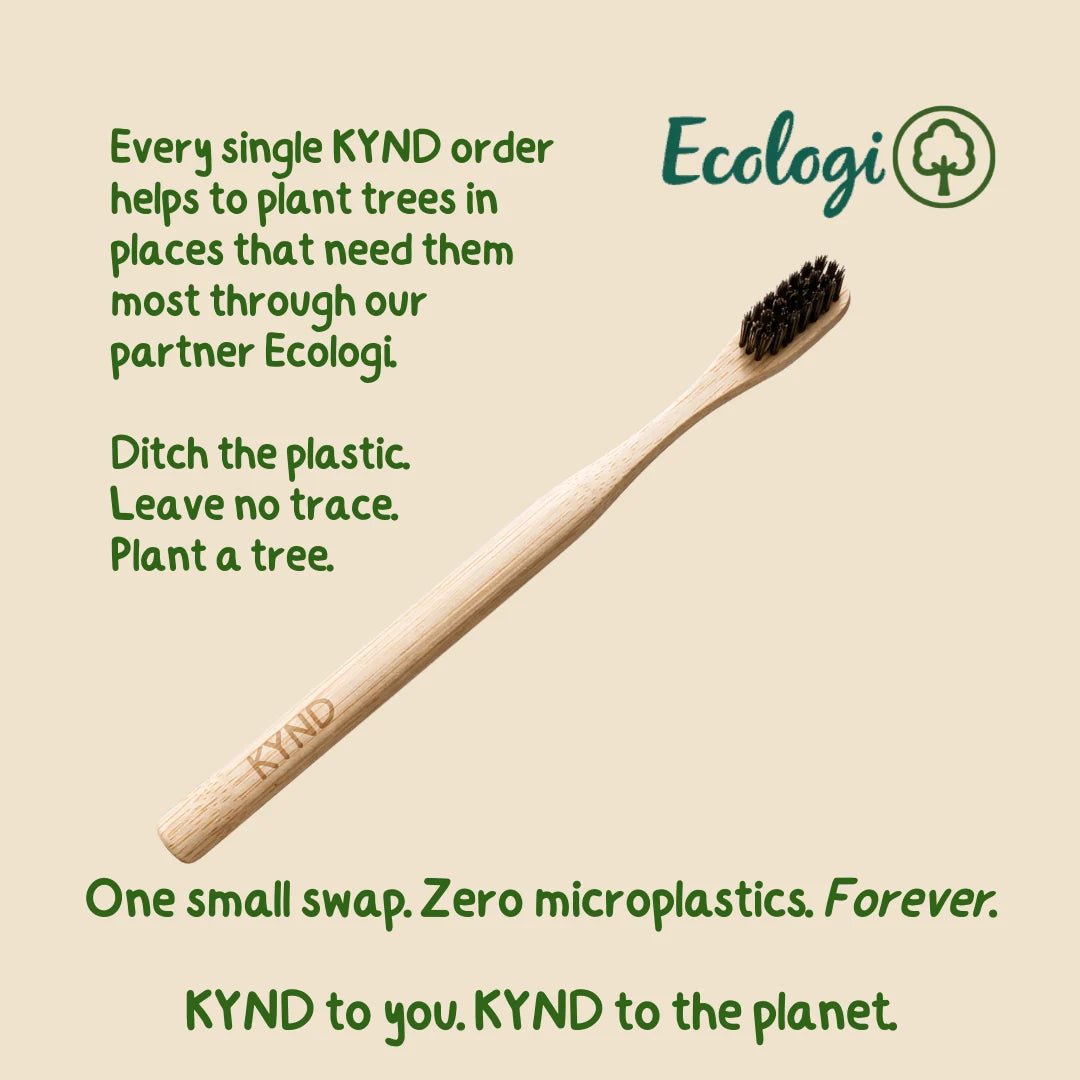
Every KYND order helps fund tree planting through Ecologi — one of the world’s most trusted climate platforms, with millions of trees planted globally.
We use bamboo because it’s one of the fastest-growing and most renewable materials on Earth. Partnering with Ecologi felt like the natural next step.
Small daily habits matter. Brush your teeth. Plant a tree. Leave things better than you found them.
It's the KYND thing to do.
You can view our live Ecologi impact portal here →
What if I don't like them?
What if I don't like them?
Email us at support@trykynd.co and we'll get it sorted out for you, that's a promise.
But if natural bristles aren't for you and you'd prefer to go back to grinding plastic into your mouth twice a day... we'll give you your money back and wish you well.
Most toothbrushes aren't KYND...

Still brushing your teeth with plastic?
99% of toothbrushes use nylon bristles. Nylon is plastic. Made from petroleum.
And every single time you brush, microscopic plastic fragments break off and enter your mouth, your digestion, your bloodstream.
Twice a day. 365 days a year.
For your entire life.
Your partner, loved ones, and kids, too.
You avoid seed oils. You read ingredient labels. You care about what goes in your body...
But nobody ever questioned the thing grinding plastic into your teeth twice a day.
It's not your fault. Nobody thought to question it until the research started emerging.

2.3 MILLION
Microplastic particles. Per person. Per year.
From your toothbrush alone.
That's what the science says.
Not from pollution. Not from packaging...
From the thing you put in your mouth twice a day, every day, since you were a child.
They've been found in human blood, lung tissue, and placentas.
The science is no longer emerging. It's here.
"But I use a bamboo toothbrush...!"
Good instinct... But here's what they don't tell you: most bamboo toothbrushes still use nylon bristles.
The same plastic bristles as a regular toothbrush.
Bamboo handle, plastic bristles.
You're still swallowing microplastics every single day, falling victim to greenwashing.
The handle was never the problem.
The bristles are.

Microplastics are now found in human blood, lungs, brain tissue and reproductive organs.
Scientists are finding them everywhere.
A 2024 Nature Medicine study found that human brain tissue now contains nearly 5,000 micrograms of plastic per gram. That's roughly the weight of a credit card. In your brain. And levels are 50% higher than they were in 2016.
People with dementia had five times higher microplastic levels in their brain tissue than healthy people. Researchers are clear: they accumulate over time and don't leave.
Long-term effects are still unknown...
But do you want to keep adding more?

One small swap. Zero microplastics. Forever.
KYND uses horse hair bristles, the original bristle used for thousands of years before plastic was invented. Woven into a steam-carbonised bamboo handle with a touch of beeswax. That's it.
No nylon. No plastic. No synthetic coatings.
Cleans just as well without feeding you plastic.
And when you're done, the whole brush and box composts.
No landfill. No ocean. Just back to the earth.
KYND to you.
KYND to the planet.
We're proud to partner with Ecologi.
We support responsible reforestation, ecosystem restoration, and carbon removal projects worldwide. Every project is rigorously vetted by Ecologi to ensure the right trees are planted in the right places, with local communities, and that carbon removal meets strict quality criteria.

Amazing quality product with absolutely no plastic. I will be using these from now on for the entire family + my dogs!
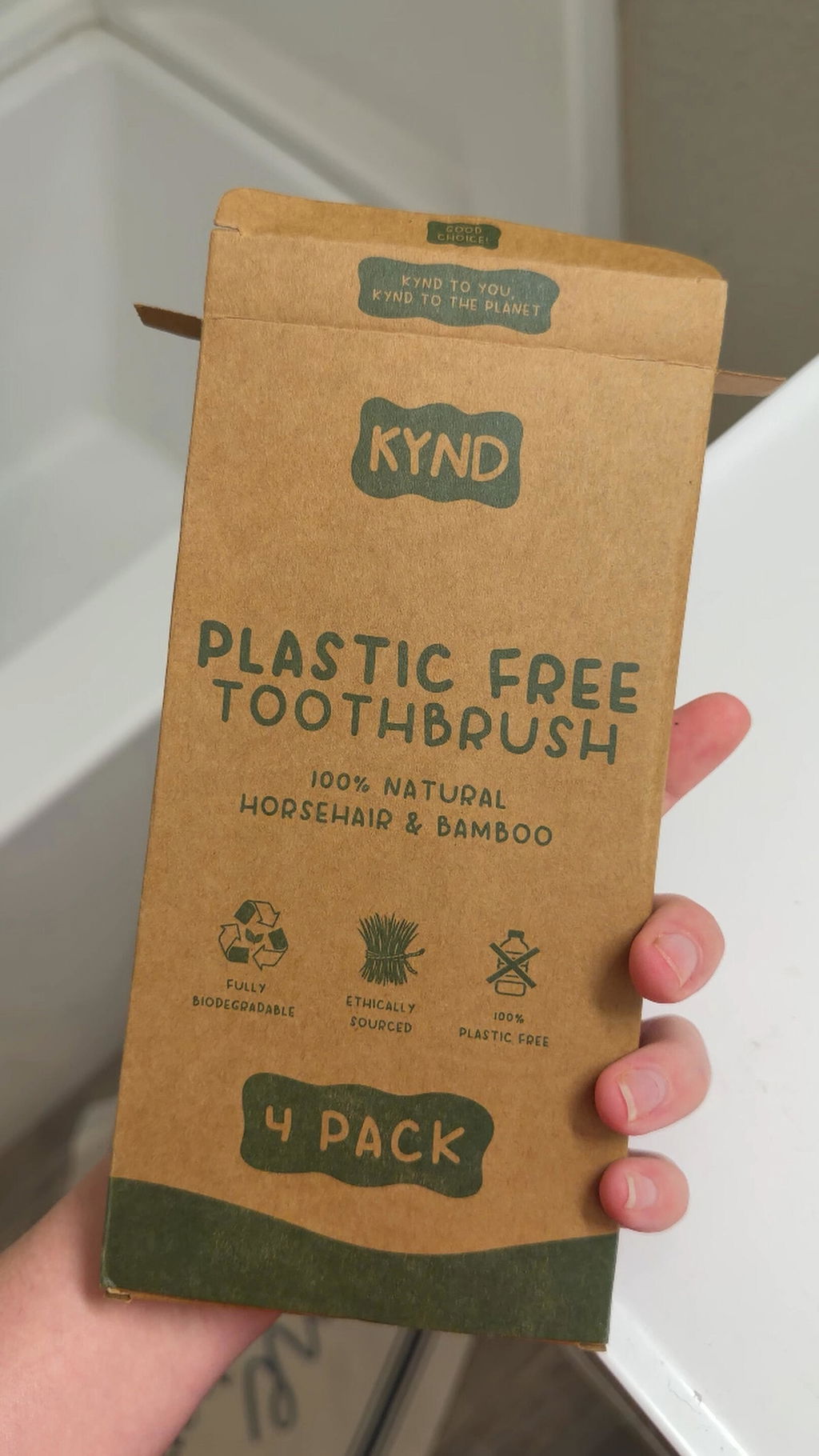
Top tier natural toothbrush. Been using mine for over a month now, works great if not better than normal tooth brush and knowing I’m no longer microplastic maxxing is a huge peace of mind. I’ve been using bamboo for years but they had nylon bristles! So having KYND with horse hair bristles is such a game changer and feels really nice on the teeth and gums.
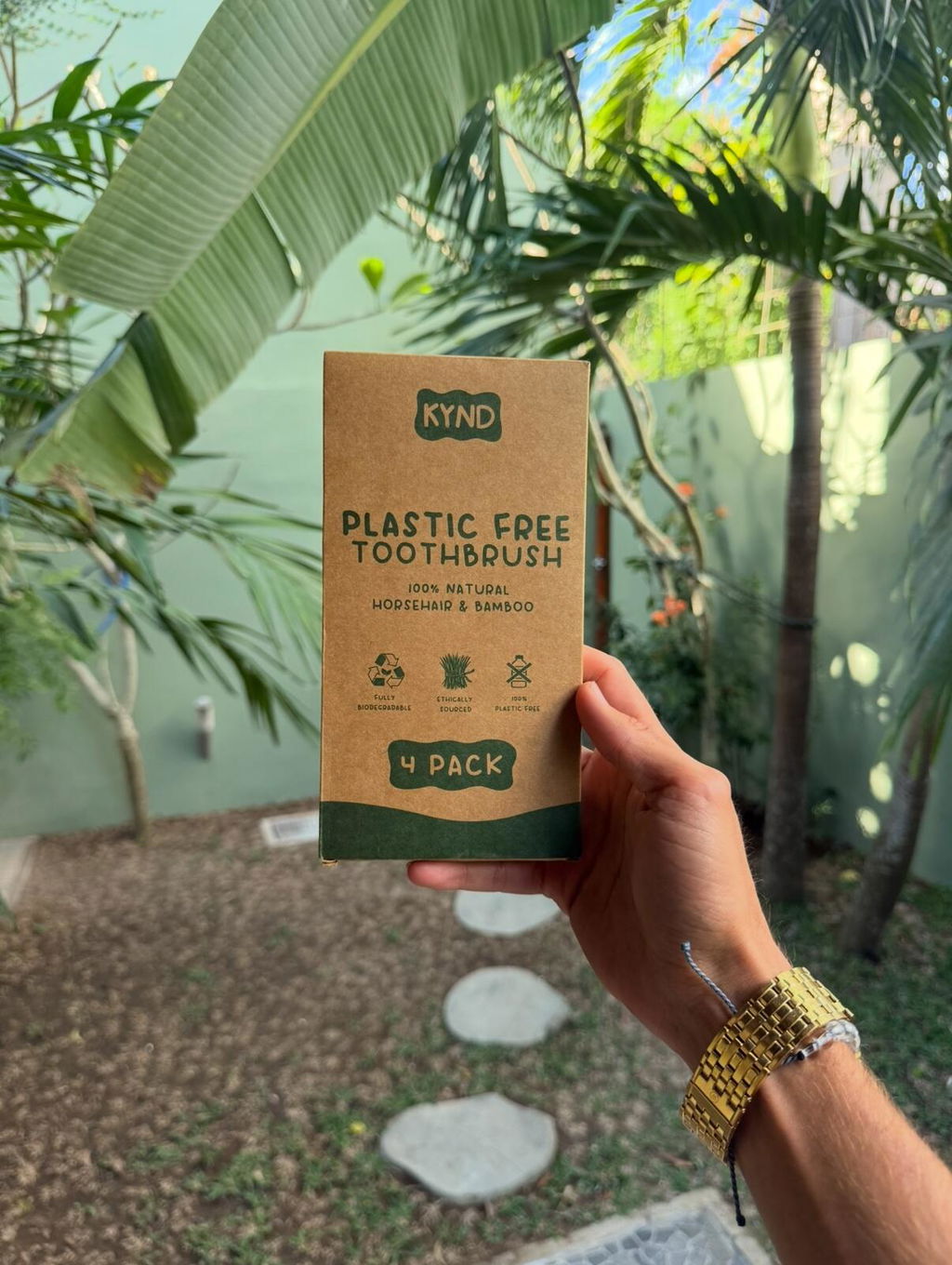
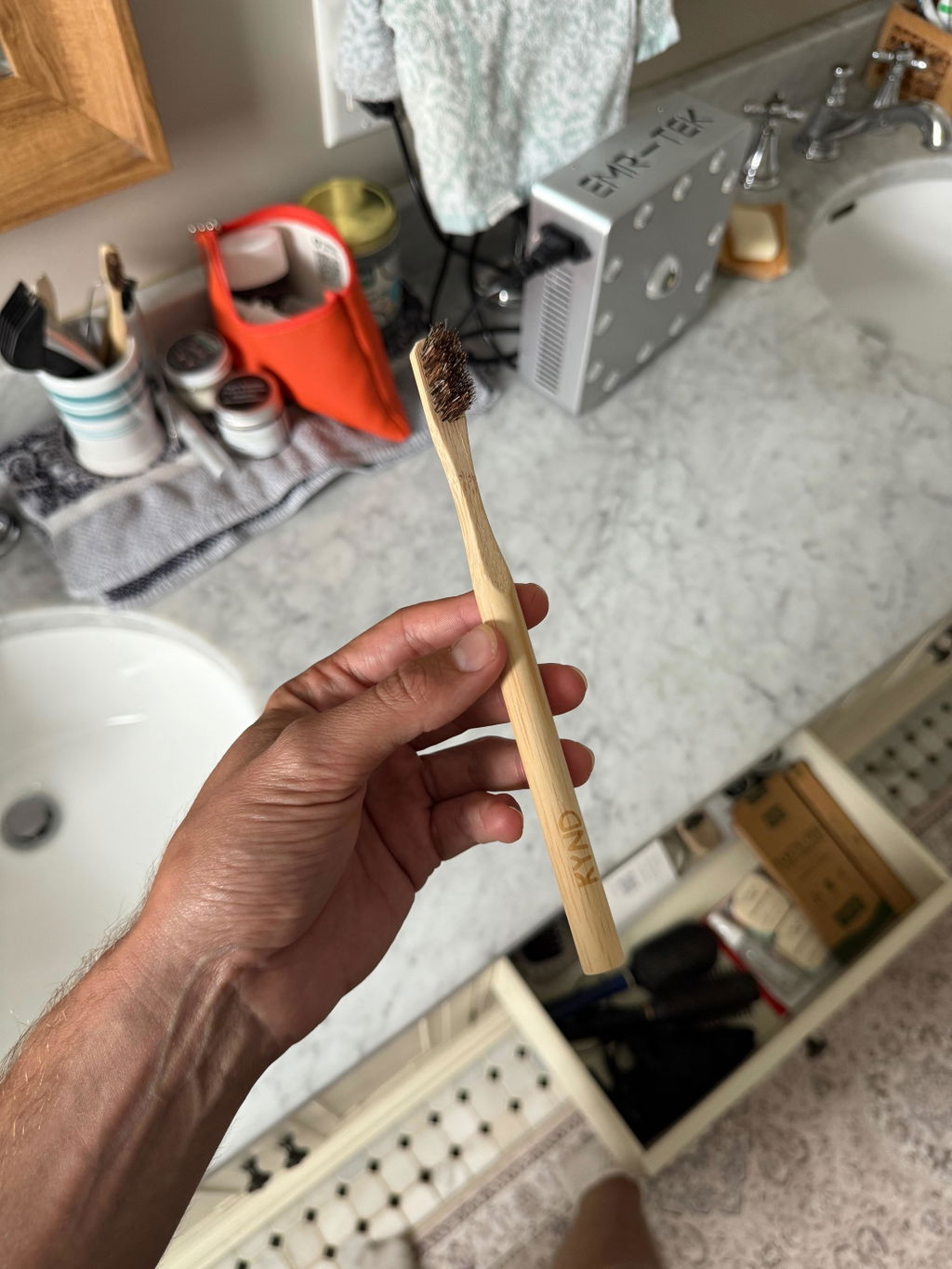
love this bamboo toothbrush! It feels really nice to use, the bristles are gentle and leave my teeth feeling clean, and I love having a more natural alternative to the typical plastic toothbrush. The bamboo handle is comfortable to hold and looks much nicer in the bathroom too:) Definitely recommend if you’re trying to cut down on plastic in your everyday routine!
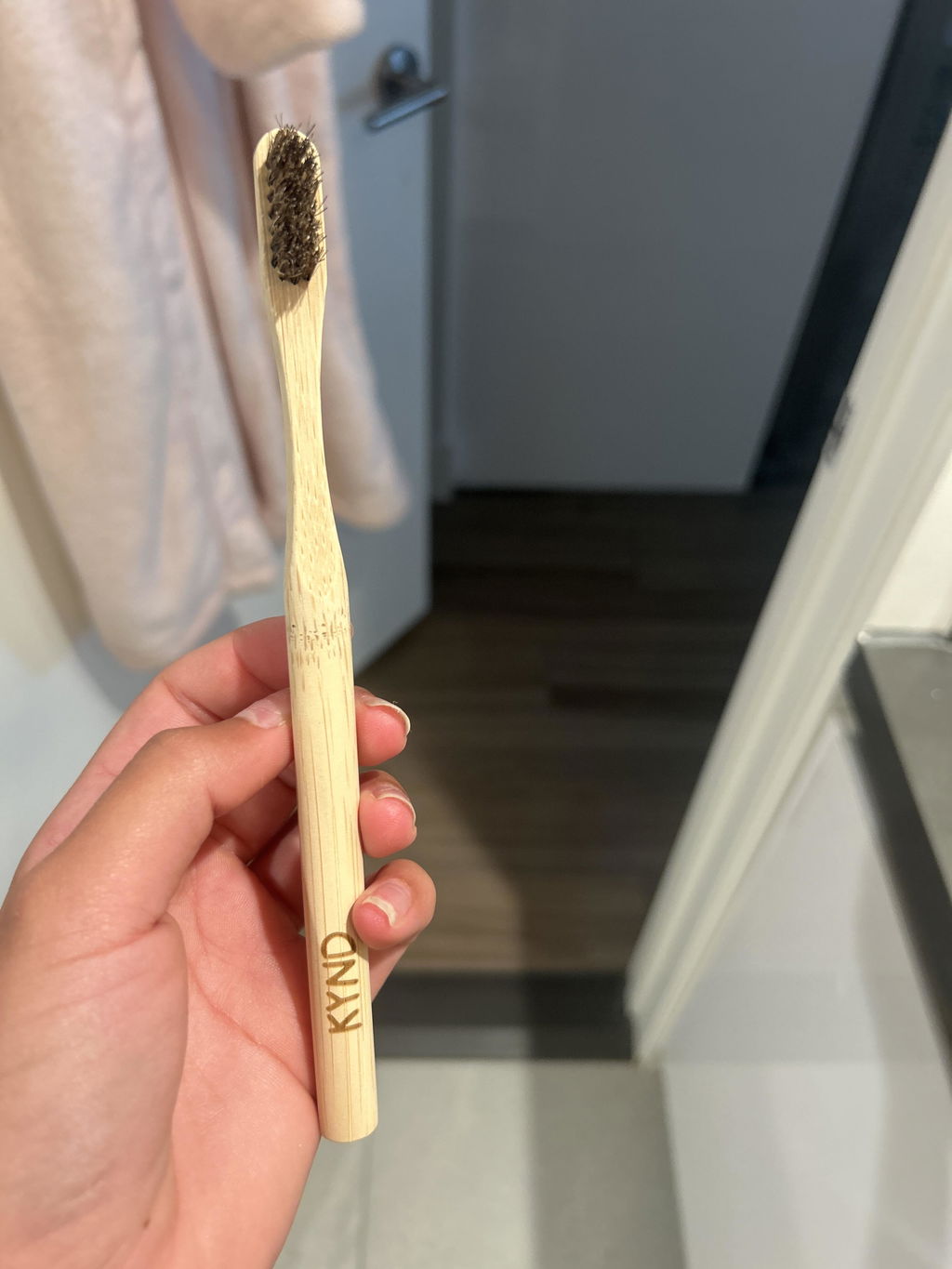
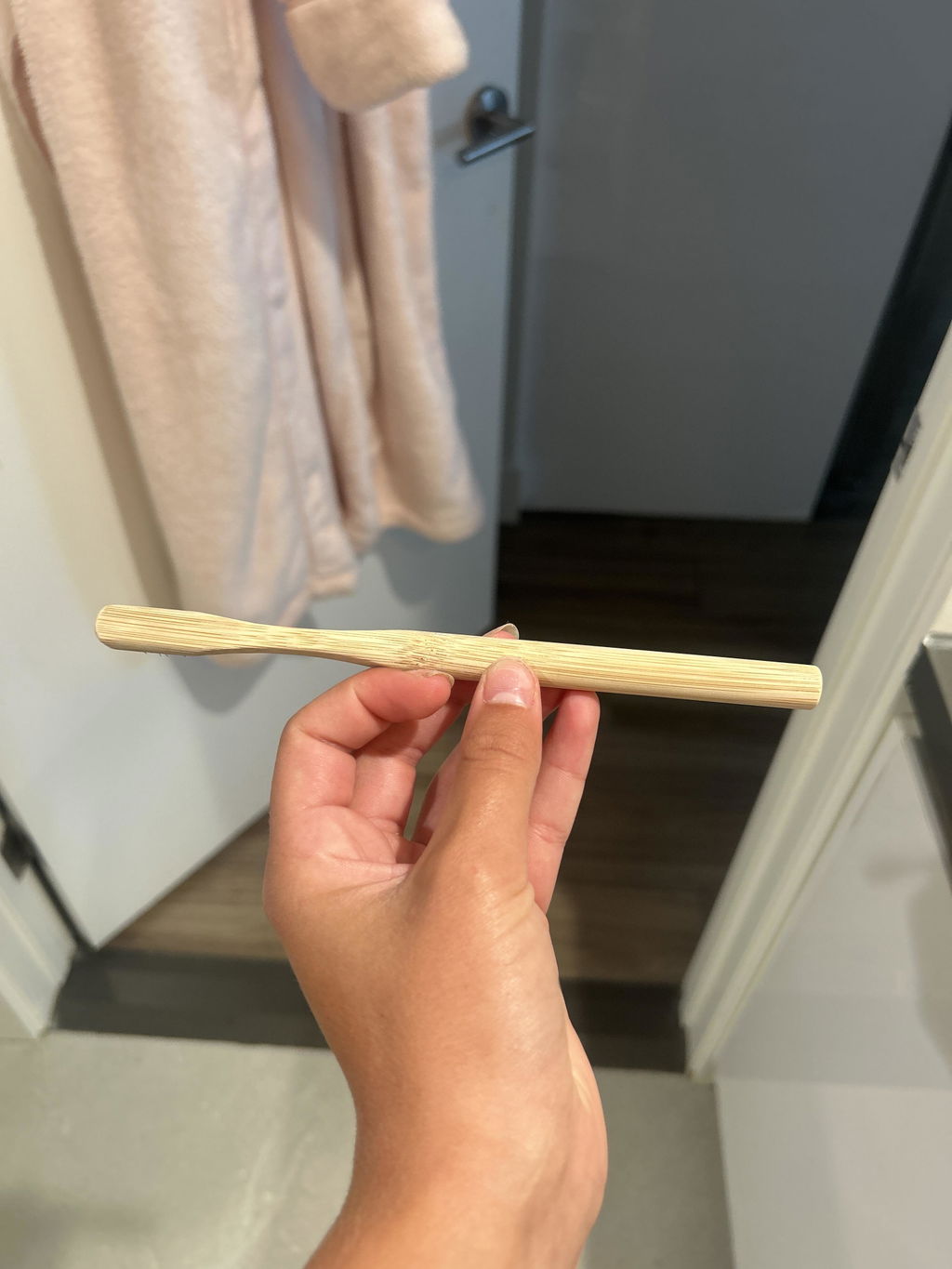
These are the best non-toxic toothbrushes I've used! Great design and high-quality build. I have so much peace of mind brushing my teeth now knowing they are completely microplastic free. Highly recommend KYND!
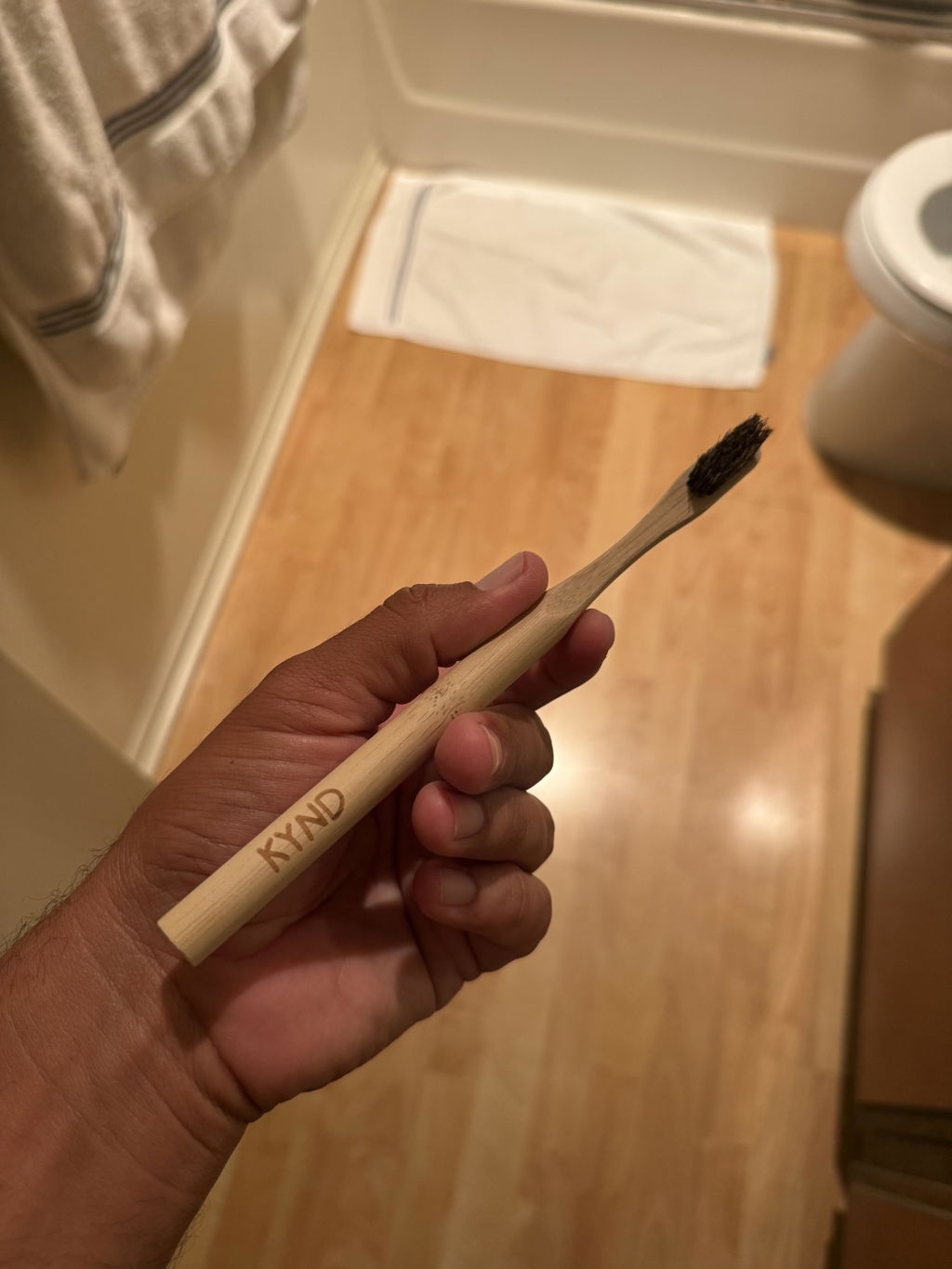
Very smooth bamboo, hair bristles are the perfect thickness. Great personable founder. Highly reccomend especially for travel!
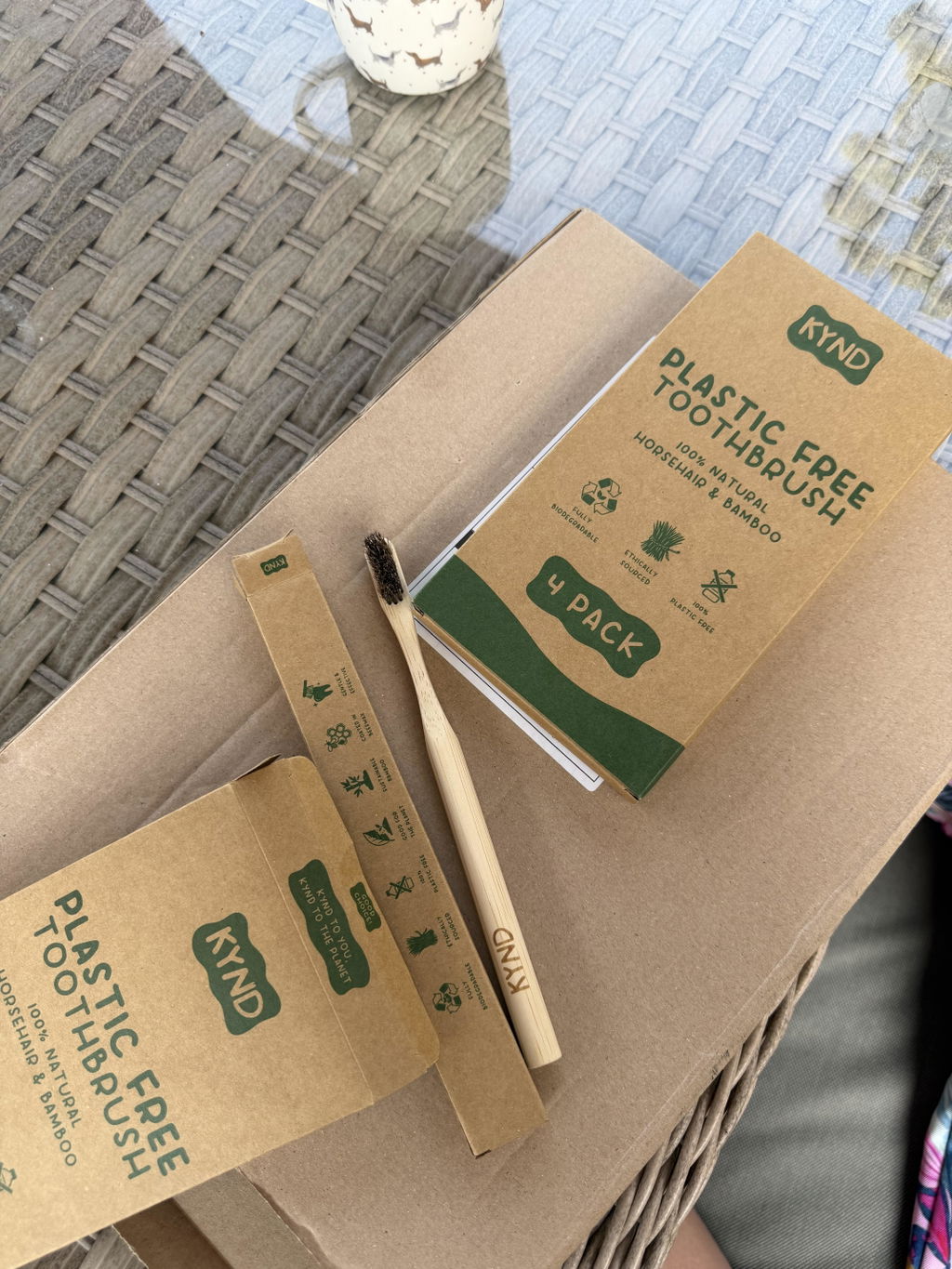
Absolutely brilliant - so hard to find zero plastic toothbrushes & this one is so gentle on gums too! I’ve also had braces and I’ve felt even with that, these have cleaned my teeth so well! Couldn’t recommend enough - a really great alternative to microplastic toothbrushes that leach into your gums everyday , this is a great way to optimise your health. Packaging also great :)
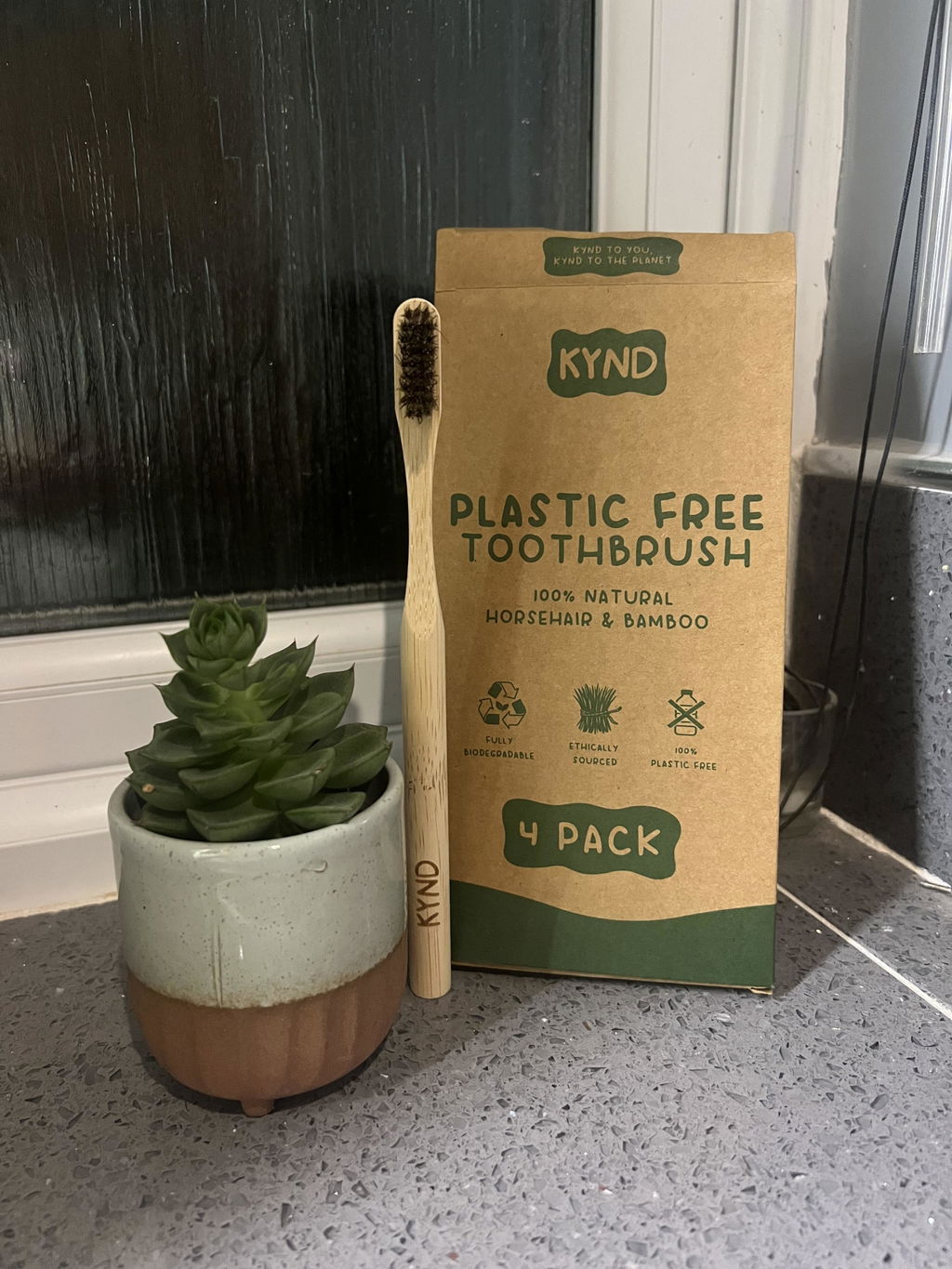
Amazing toothbrush. I will never use anything else!
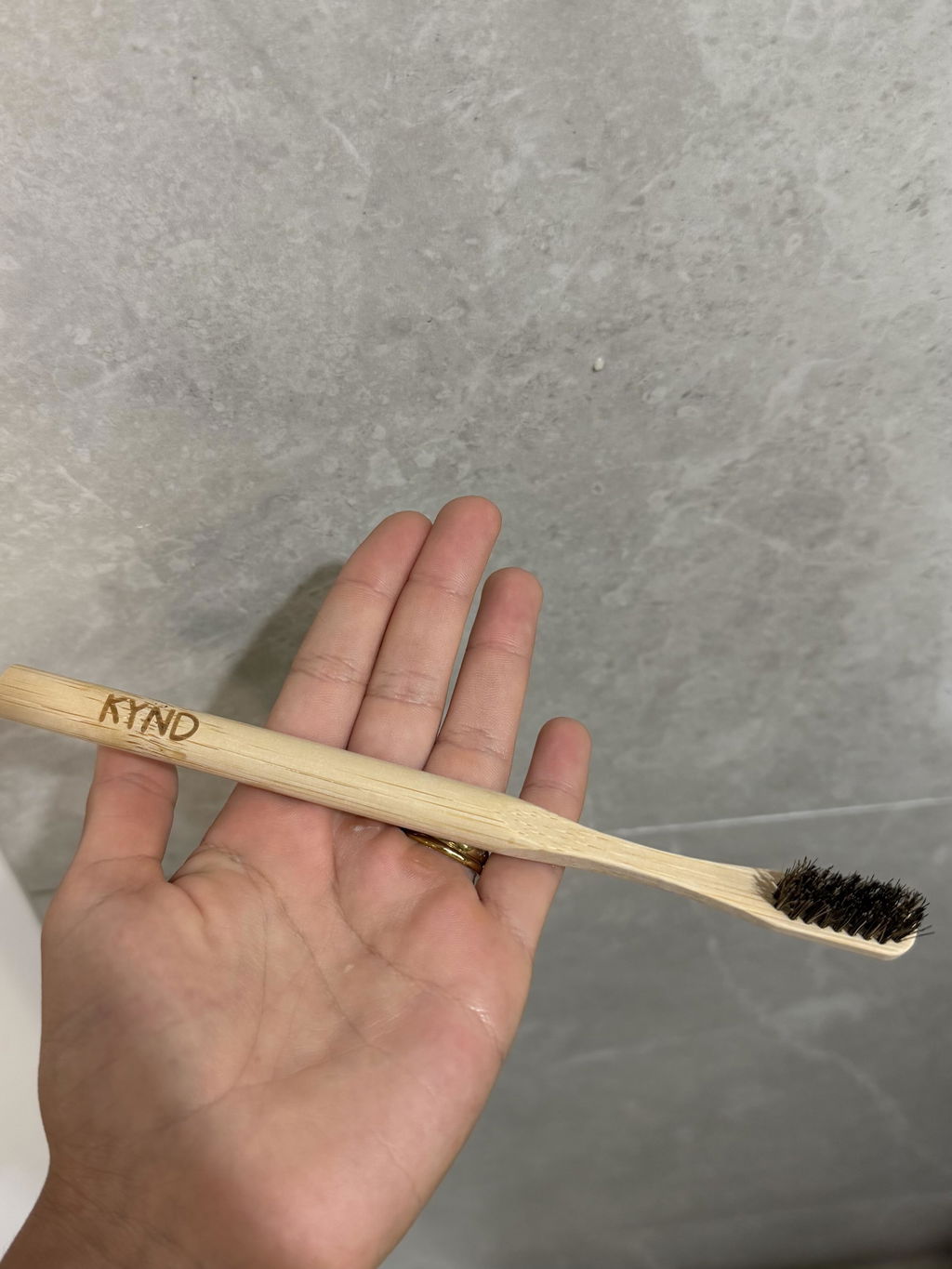
Great toothbrushes, teeth, and gums feel great. Went to the dentist yesterday after only using KYND, and everything was perfect. The pocket sizes of my gums improved as well compared to last time.
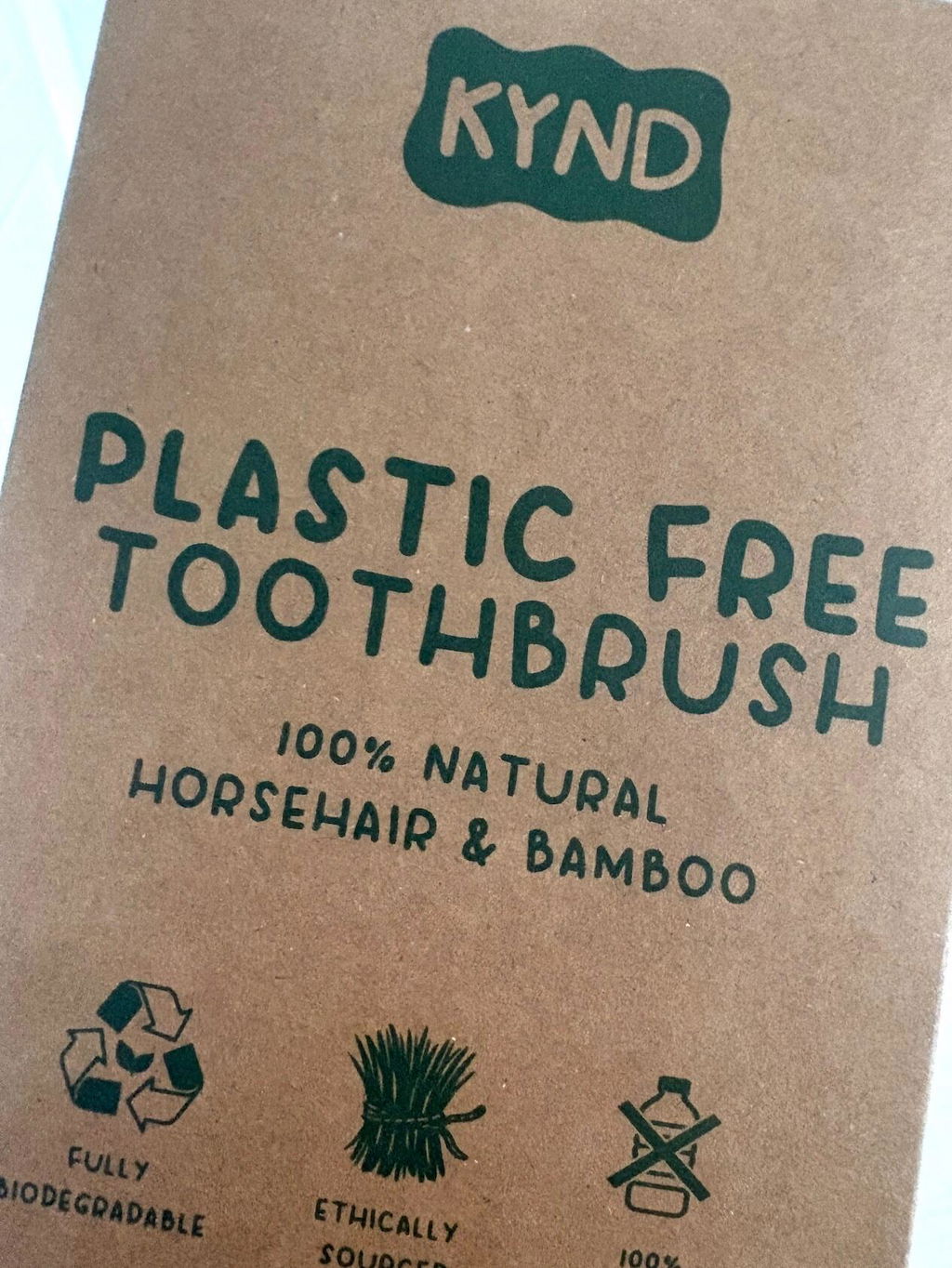
Genuinely an amazing product, despite the obvious benefits of it being toxin free, my teeth feels substantially cleaner than in the past when I have used normal plastic toothbrush’s or even electric toothbrushes
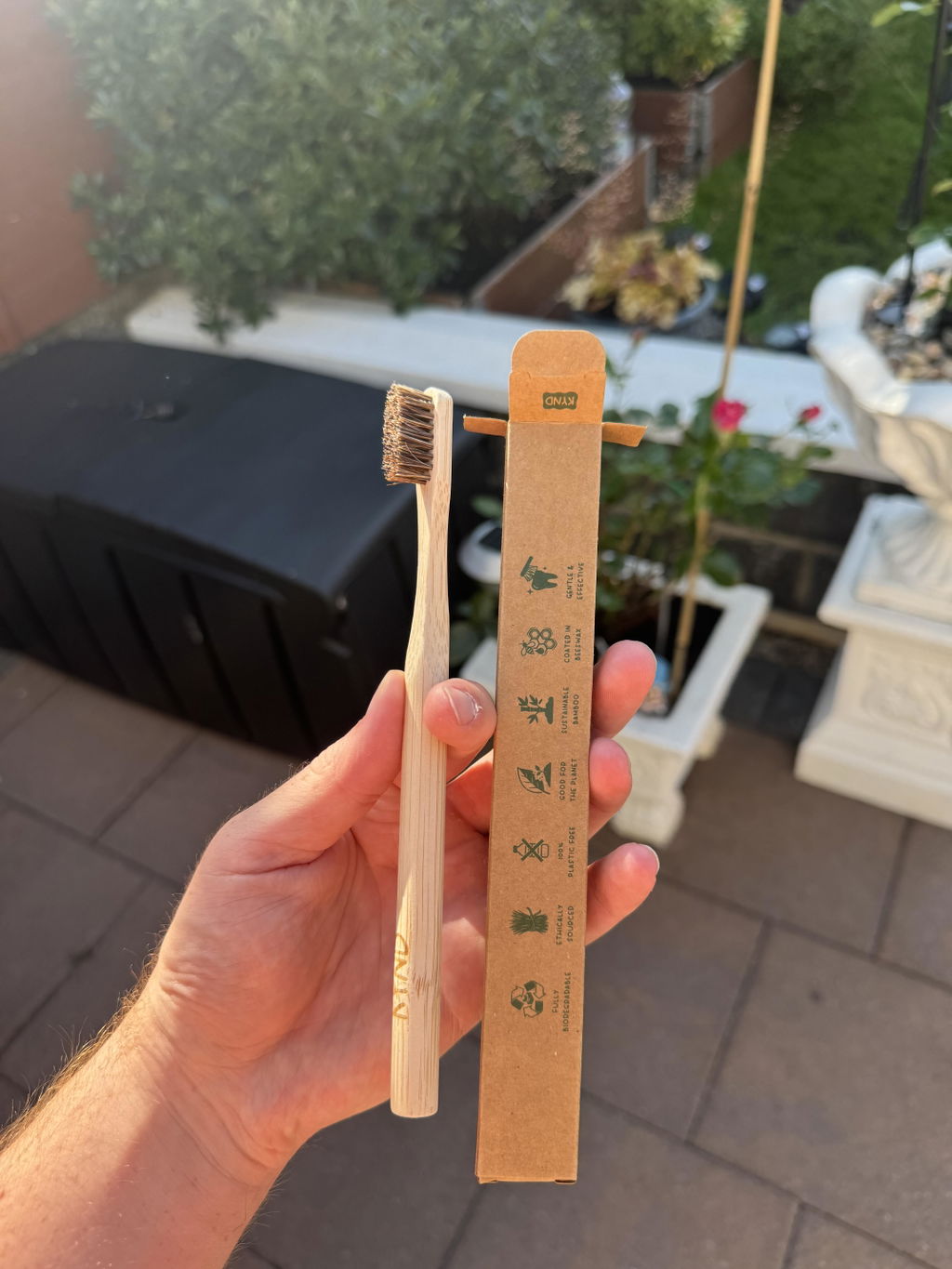
Genuinely not only my teeth but my whole entire mouth has never felt cleaner than with these toothbrushes. After using for a few days it feels like I went to the dentist for a cleaning haha
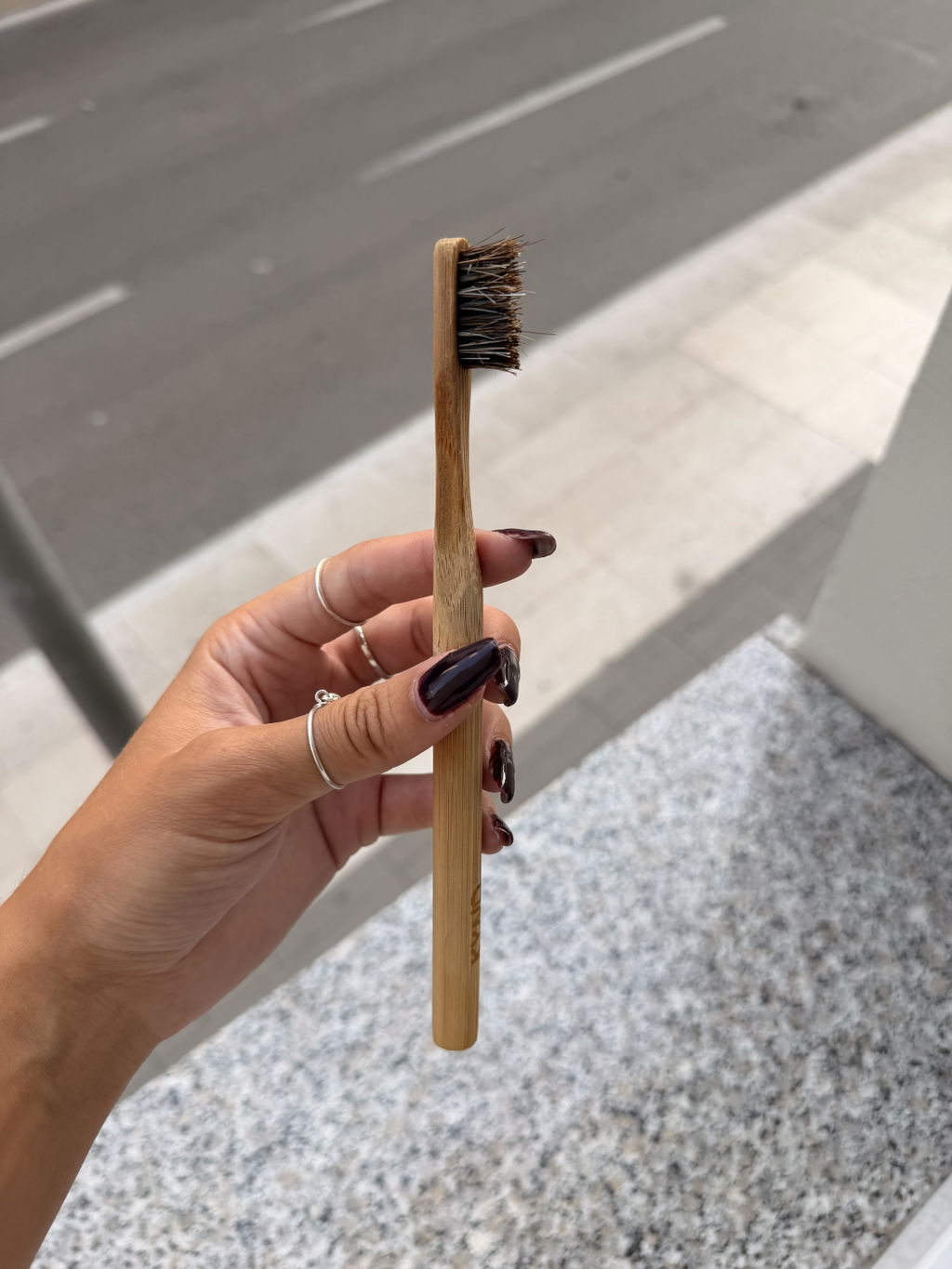
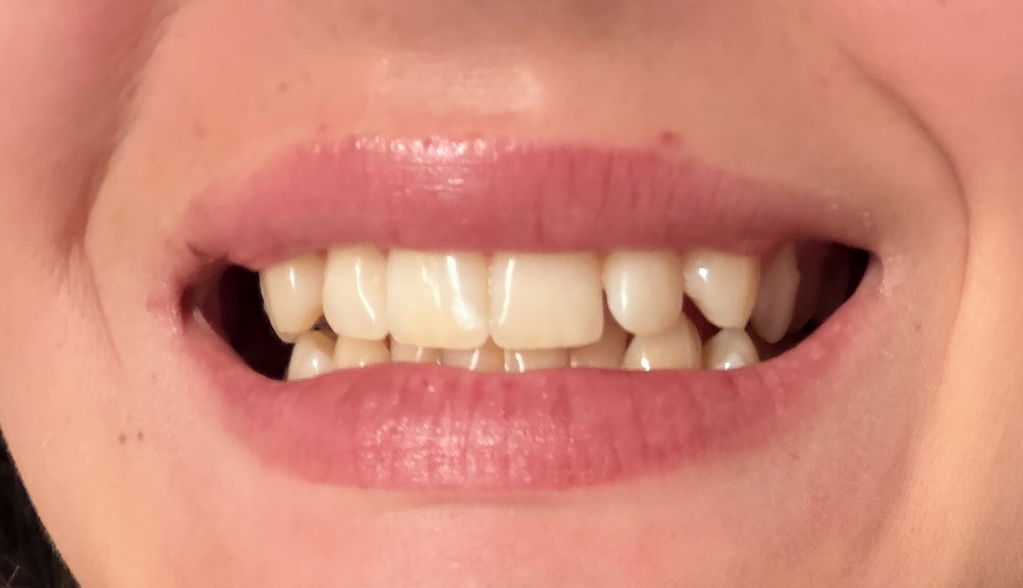
Feels amazing on my teeth and love the horse hair idea.
Can definitely say this has undoubtedly become my new standard when it comes to dental hygiene!
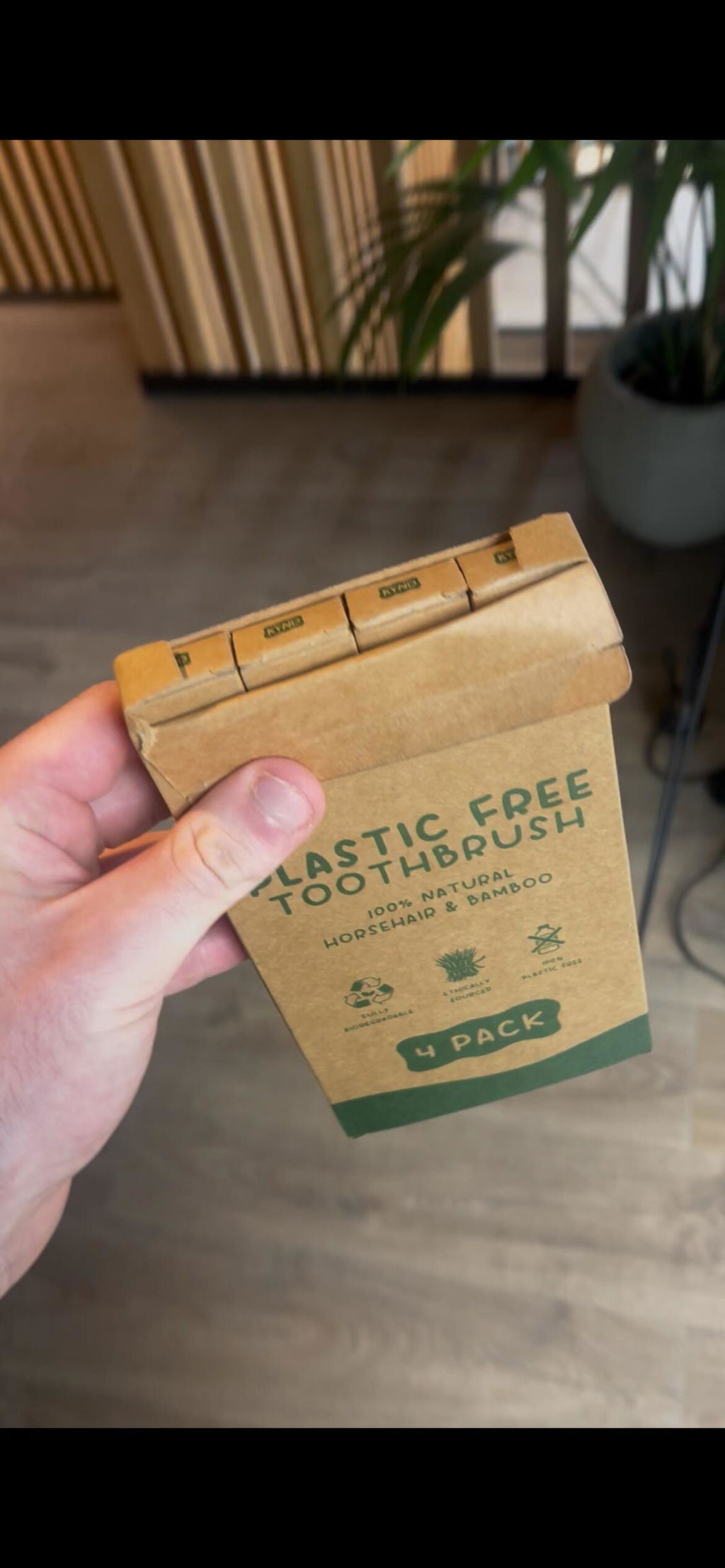
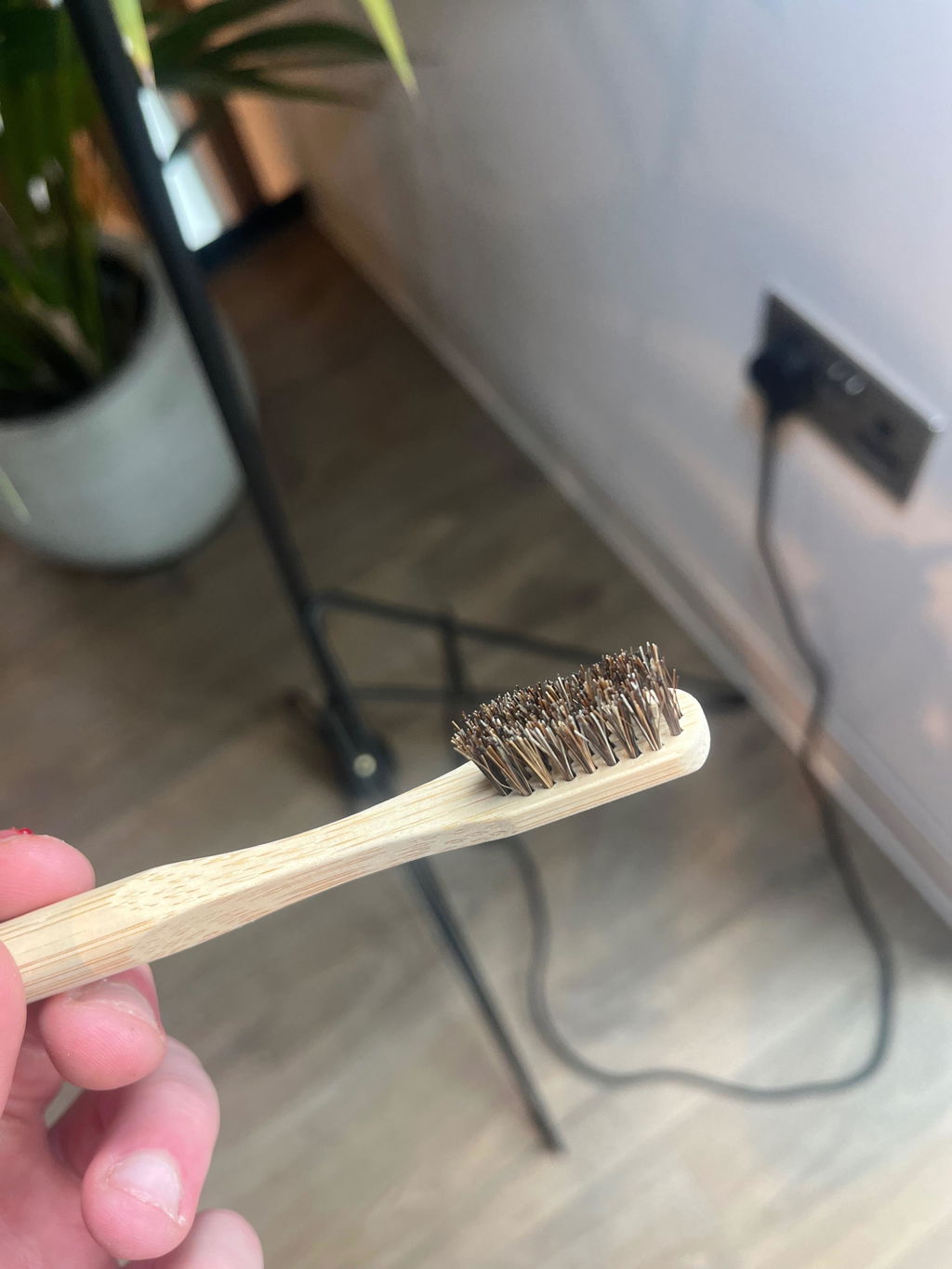
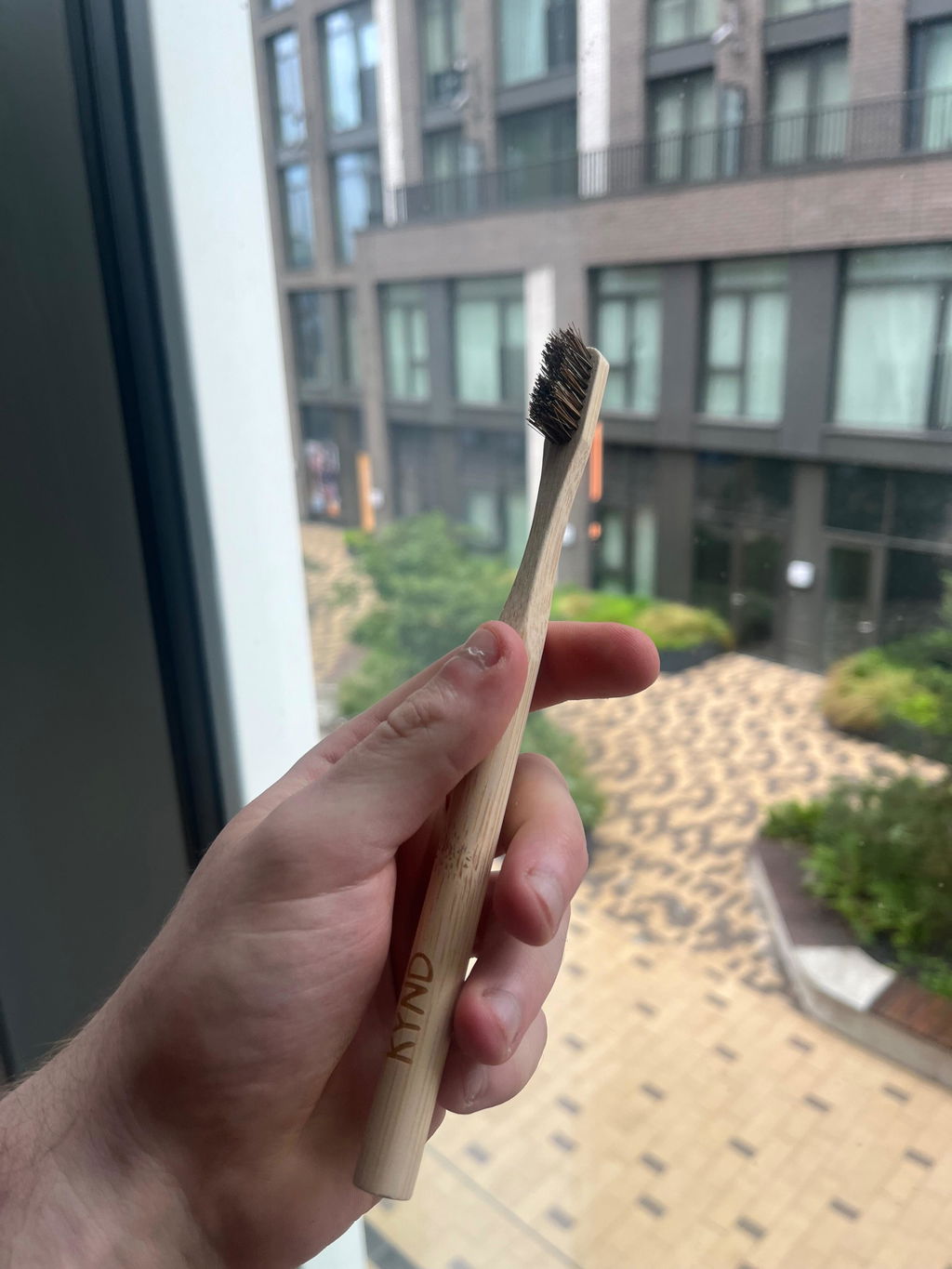
Great new era toothbrushes, gentle and effective cleaning, smooth and elegant look,highly recommend!
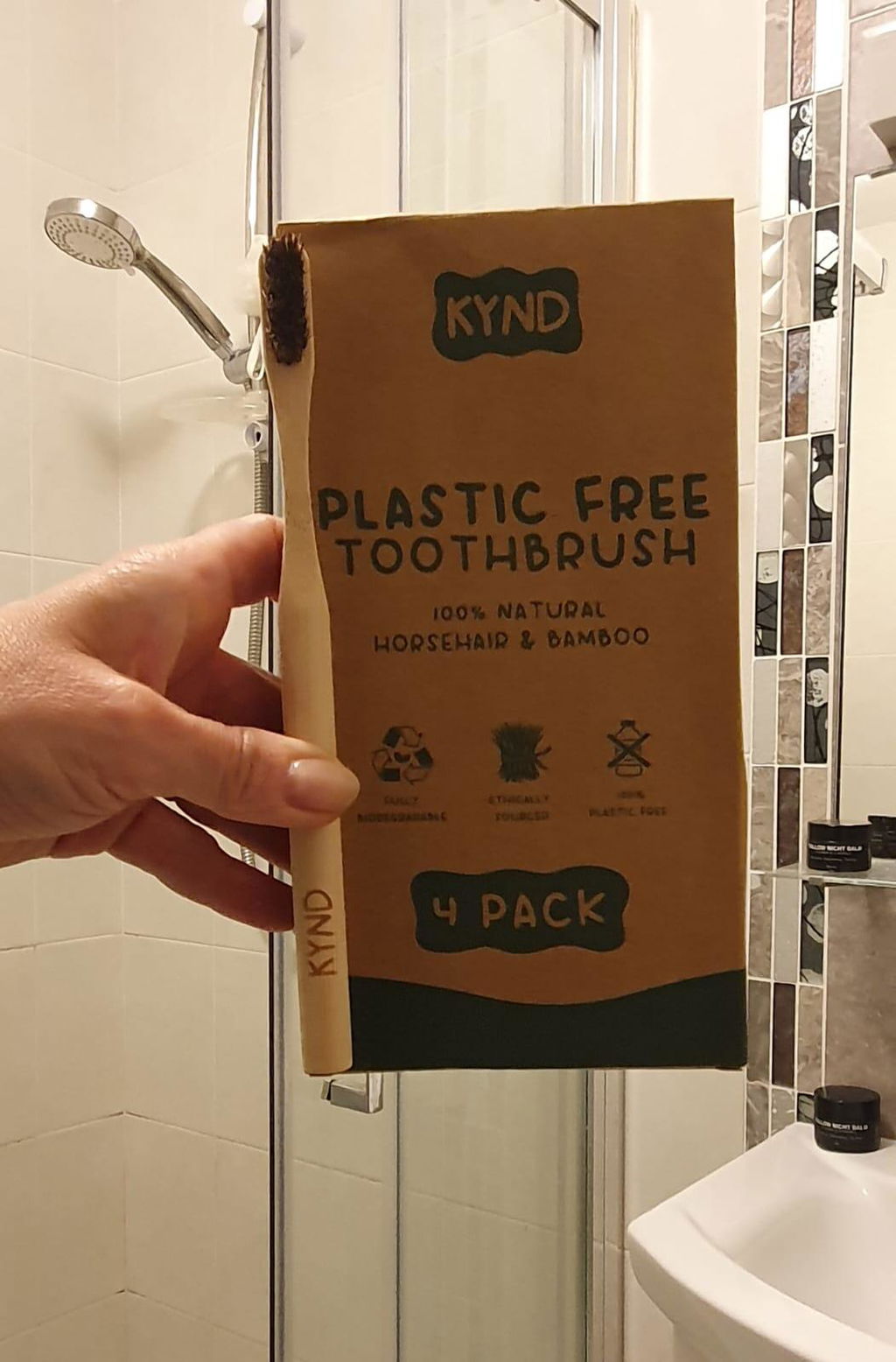
Without a doubt the best toothbrush I have ever used, joy to use actually. Big smiles all around.

amazing tooothbrush
I’m not sure what I think of these brushes yet, I genuinely wasn’t expecting so many of the hairs to fall out when brushing.
It’s an uncomfortable feeling picking the hairs out of my mouth that haven’t come out with rinsing when I’m finished brushing. (Noting I don’t have sensory issues)
I want to reduce my plastic consumption so I’m really trying to get comfortable with it but it’s a challenge. I’m trying to give it time but I’m unsure if I’ll stick with it!
Thanks for your honest feedback Karen! A small amount of shedding can occur during the first few uses because KYND uses natural horsehair bristles woven into the bamboo head, without the glue or metal-staple methods used in standard toothbrushes.
Because both bamboo and horsehair are natural materials, they respond slightly to moisture as they go through their first wet/dry cycles. During this initial 'break-in' period, an occasional loose natural bristle can work its way out. We recommend brushing with gentle pressure and letting the bristles do the work.
That said, the amount of shedding you’ve described is higher than we would normally expect, so we’ve contacted you privately and passed your feedback to our quality-control team for review. We really appreciate you giving KYND a genuine try and sharing your experience with us.
Great no plastic tooth brush solution
Good quality, natural toothbrush. Glad there are no microplastics.
Great convenient alternative to my miswaks. Bamboo feels good in my hand aswell does the horsehair in my mouth. Very gentle to my gums and teeth.
Absolutely love this toothbrush from Kynd. The boar bristles feel gentle on my gums while still leaving my teeth feeling incredibly clean. I also love that it feels like a more natural, holistic alternative to conventional synthetic toothbrushes. The quality is solid, the design is simple, and it’s become an easy upgrade to my daily routine. Elite product.
Love it! Toothbrush of my dreams!
Amazing product!
Feels nasty to think I was grinding plastic into my teeth every day… this is the last toothbrush I’ll ever use. No more microplastic ✌🏼
Fantastic product. I love the concept and genuinely love using my toothbrush every day :)
Great natural product that doesn’t compromise on effectiveness
Amazing amazing toothbrush. Will never switch back to the plastic - starts my day off so well knowing that I’m not polluting my body haha